







Toilet Cisterns


Compact close-coupled cistern


Valarte Close Coupled Cistern


Sento Close-Coupled Cistern


Zentrum Close Coupled Cistern


S20 Round Universal Cistern, 3/6L


S20 Soft Square Universal Cistern, 3/6L


S20 Square Universal Cistern, 3/6L

Toilet Cisterns
A reliable toilet starts with the right cistern. Behind every smooth, controlled flush sits a carefully engineered mechanism that manages water volume, pressure and refill speed. At VitrA, our Toilet Cisterns are developed to support consistent WC performance in busy family bathrooms, compact cloakrooms and large renovation projects across the UK.
When you choose a VitrA toilet cistern UK homeowners trust, you are not simply selecting a water tank. You are investing in quiet operation, long-term durability and compatibility with coordinated ranges. From close coupled units to concealed toilet cistern systems hidden within walls or furniture, each solution is designed to meet UK plumbing standards and modern dual flush expectations.
Choosing The Right Toilet Cistern For Your Bathroom
A bathroom cistern tank plays a central role in how your WC performs every day. It stores and releases water at a controlled volume, ensuring effective bowl clearance on every flush. In the UK, most homes now use a 6/3 litre dual flush toilet cistern. This configuration supports compliance with WRAS guidance.
When reviewing modern toilet cistern systems, consider the following:
- Flush volume and regulation
A 3/6 litre flush system gives you flexibility. The reduced flush handles lighter use, while the full flush supports complete clearance. Correct pairing with the pan ensures strong performance at either setting. - Internal valve durability
High-quality fill valves and flush valves resist scale build-up and wear. Pressure-tested components reduce the risk of leaks and phantom flushing. - Quiet fill technology
Modern inlet valves are designed to minimise refill noise. This is especially valuable in en-suite bathrooms or night-time use. - Condensation resistance
Insulated or well-designed internal surfaces help reduce condensation on the outer casing in colder UK homes.
VitrA Toilet Cisterns are engineered for long service life. Components undergo pressure testing to simulate years of use. Installers benefit from consistent bolt centres, clearly marked inlet positions and compatibility across coordinated VitrA ranges. For homeowners, this means easier wc cistern replacement and simpler access to replacement parts in the future.
If you are planning a full bathroom update, it makes sense to consider the pan and cistern together. When planning a full upgrade, explore matching toilets. Coordinated products ensure the flush outlet, fixings and design lines align correctly.
Types Of Toilet Cisterns Available
Understanding the different categories helps you select the most appropriate Toilet Cisterns for your layout. Each type suits a specific installation method and visual preference.
Close Coupled Cisterns
A close coupled toilet cistern sits directly on the pan and is fixed using bolts and a sealing washer. The flush pipe connection is short and concealed between the cistern and pan.
- Installation style
The cistern and pan form a single unit. This is common in UK homes and suits straightforward replacements. - Maintenance access
Access to internal components is through the top lid. Most push button flush systems are mounted on the lid surface. - Space requirements
Ideal for standard bathroom layouts with sufficient rear wall clearance.
For traditional floor-mounted options, see the close coupled toilet range.
Concealed Cistern For Back To Wall Pans
A concealed cistern unit is hidden behind a furniture unit or false wall. Only the flush plate is visible from the front.
- Cleaner exterior appearance
Pipework and tank are concealed, creating a streamlined look. - Easier floor cleaning
With fewer visible joints, dust and moisture are easier to manage. - Service access
Access is typically through the flush plate aperture or a removable panel.
Wall Hung Toilet Cistern
A wall hung toilet cistern sits within an in wall cistern frame. The pan is mounted off the floor and fixed to the frame system.
- Structural support
Requires a wall hung toilet frame system fixed within a stud wall or solid wall construction. - Load capacity
Quality frames are tested to support substantial weight loads, offering reassurance in daily use. - Modern appearance
The floating pan leaves the floor fully visible, which suits compact bathrooms and contemporary renovations.
For a high level toilet cistern UK style or low level cistern arrangement, structural support and pipe routing must be assessed early in the design stage. Always confirm compatibility between the flush outlet and the chosen pan to ensure correct performance.
Concealed Toilet Cistern Systems And Frames
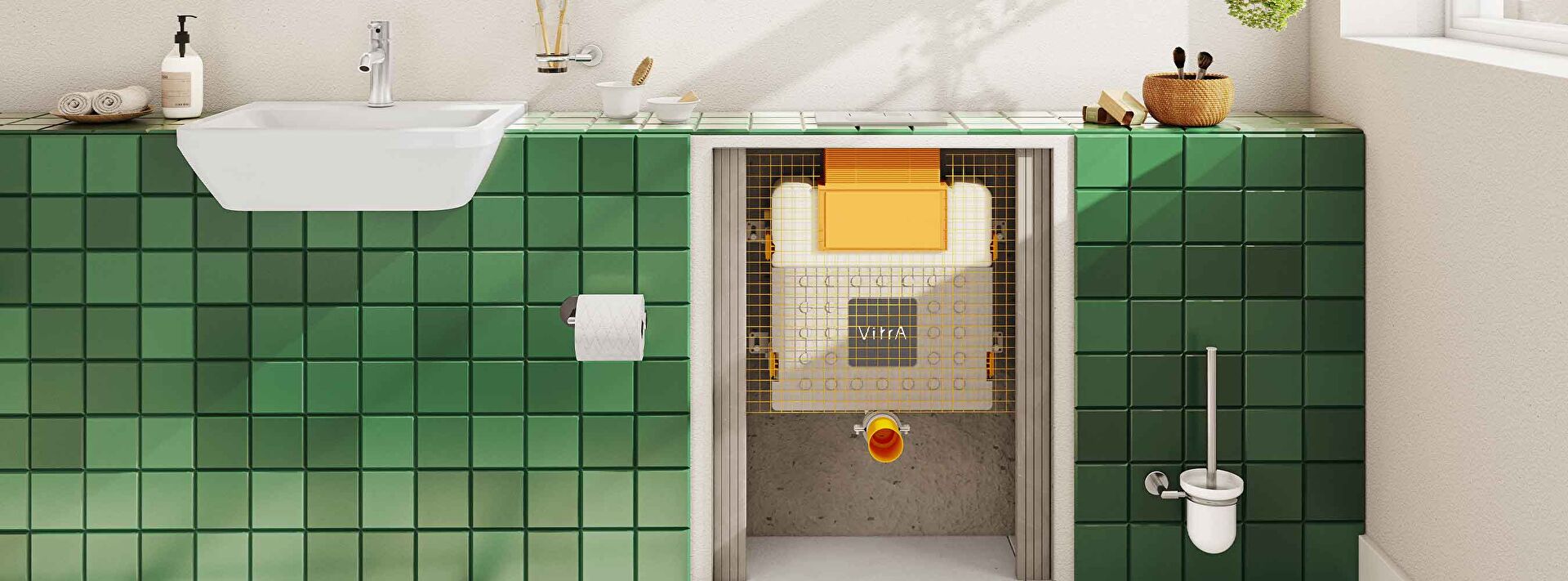
A concealed toilet cistern transforms how your bathroom feels. The tank and pipework sit behind plasterboard or furniture. You only see the flush plate and the pan. This approach works particularly well in smaller UK bathrooms where every centimetre matters.
VitrA built in cistern for WC solutions are designed with adjustable frames. Height can usually be set to suit user preference, which is helpful in family homes or accessible bathrooms. Depth requirements vary, though many in wall cistern frame systems are suitable for standard stud partitions.
Key technical considerations include:
- Frame load capacity
Wall hung toilet frame system structures are tested for strength and stability. Robust steel frames distribute weight safely into the wall and floor. - Adjustable height and levelling
Installers can fine-tune the pan height during installation, ensuring comfort and compliance with design requirements. - Service access through flush plate
A dual flush concealed cistern allows access to fill and flush valves via the plate opening. This reduces disruption during maintenance.
Pair in-wall systems with a wall hung toilet. Coordinated VitrA Toilet Cisterns and frames simplify installation and reduce compatibility risks during a bathroom renovation cistern upgrade.
Another advantage is acoustic control. Because the concealed toilet cistern sits within a wall cavity or furniture unit, refill noise is often less noticeable. In busy households, this small detail improves daily comfort.
Flush Mechanisms And Flush Control
Flush control is not just a regulatory requirement. It shapes how the WC performs every day. A dual flush cistern gives you two flush volumes to choose from. In most UK homes, a 3/6 litre flush system is now standard.
A push button flush or mechanical flush plate activates the internal valve. The design must feel responsive and reliable. Weak feedback can lead to incomplete flushing, while poorly manufactured seals may cause constant running.
When assessing a dual flush toilet cistern, focus on:
- Valve seal quality
Durable seals prevent slow leaks and continuous running. - Refill speed and noise
Efficient inlet valves balance refill time with quiet operation. - Flush plate compatibility
Mechanical flush plate systems must match the specific cistern model to avoid installation issues.
VitrA Toilet Cisterns are developed to provide effective bowl clearance with a controlled discharge volume. The internal geometry of the flush mechanism supports consistent discharge volume. This reduces the risk of weak flush performance when correctly paired with the pan.
Choose a compatible flush plate. Coordinated components from the same manufacturer help ensure UK flush volume regulations are met without compromise.
Installation Considerations For Toilet Cistern Replacement
Replacing a cistern is often more straightforward than changing the entire toilet. Still, accurate measurement is essential before ordering. A successful replace toilet cistern UK project begins with checking dimensions and connection points.
Measure the following:
- Height, width and depth
Confirm available space, especially for bathroom furniture units or tight alcoves. - Bolt centres and flush pipe alignment
For close coupled models, the bolt spacing must match the pan. The flush outlet must align precisely. - Inlet position
Identify whether you need a bottom inlet cistern or side inlet toilet cistern. This affects pipe routing and isolation valve placement.
Check water pressure levels in your home. Most modern toilet cistern plumbing connection systems are designed for typical UK mains pressure. Installing an isolation valve simplifies future maintenance and reduces disruption.
During installation, ensure seals are correctly positioned and bolts are tightened to the recommended torque. Over-tightening can damage ceramic components. Proper sealing also reduces the risk of condensation-related moisture issues around the bathroom cistern tank.
For concealed installations, review options at concealed cistern solutions. VitrA cistern installation guide documentation is clear and structured. Products are designed to meet UK plumbing standards, which helps reduce call-backs for installers.
Maintenance, Spare Parts And Long-Term Reliability
Routine maintenance helps extend the lifespan of your cistern and maintain reliable flushing performance. Periodically check internal components for scale build-up, worn seals or slow refill issues. Addressing minor faults early can prevent larger flushing problems.
Access to genuine replacement valves, seals and fittings is essential for long-term reliability. Using manufacturer-approved parts helps maintain correct flush volumes and protects warranty coverage.
Find related components under bathroom complementary products. Choosing compatible accessories and spare parts ensures your VitrA Toilet Cistern continues to operate efficiently for years to come.
Frequently Asked Questions About Toilet Cisterns
How Do I Know Which Cistern I Need For My Toilet?
First check whether your pan is close coupled, back to wall or wall hung. Measure the available space, note the water inlet position and confirm the flush outlet size. For wall hung models, you will also need a compatible frame system. Matching the cistern type to the pan design is essential for correct flush performance and easy installation.
What Is The Difference Between A Single And Dual Flush System?
A single flush uses the same volume of water every time, usually around 6 litres. A dual flush gives you two options, typically 6 litres for full flush and 3 litres for reduced flush. This lets you match each flush to the load without affecting performance when correctly matched to the toilet pan.
Can I Replace A Toilet Cistern Without Changing The Whole Toilet?
In many cases, yes. If you have a close coupled model and the pan is in good condition, you can replace the cistern separately as long as the bolt centres, flush outlet and inlet positions are compatible. Always measure carefully and confirm product specifications before purchasing to ensure a secure fit and reliable flushing performance.


